Blog
The Alchemy Blog
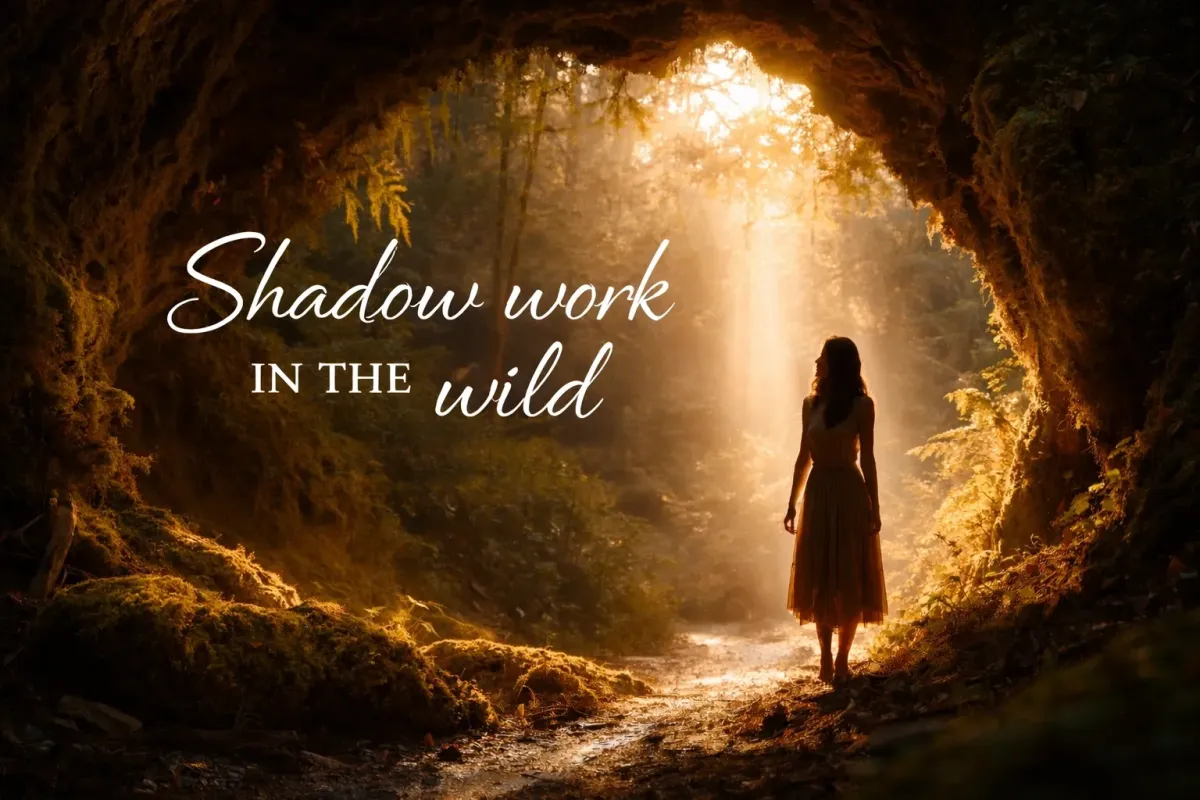
Shadow Work at the Threshold: How Wild Immersion Helps You Face Your Darkest Parts
Shadow Work at the Threshold: How Wild Immersion Helps You Face Your Darkest Parts
![[HERO] Shadow Work at the Threshold: How Wild Immersion Helps You Face Your Darkest Parts](https://cdn.marblism.com/Zs1vEbCPiJI.webp "[HERO] Shadow Work at the Threshold: How Wild Immersion Helps You Face Your Darkest Parts")
There's a moment in every woman's life when she stands at a threshold. A crossroads. A place where the familiar path ends and something unknown begins. And at that threshold, waiting in the half-light, are all the parts of herself she's spent years avoiding.
This is where shadow work begins. And increasingly, women are discovering that the most potent place to do this work isn't a therapist's office or a meditation cushion in their living room. It's in the wild.
What Lives in Your Shadow
Carl Jung gave us the language for this. He called it the "personal shadow." These are the aspects of yourself that you've tucked away because they felt unacceptable. Too angry. Too needy. Too wild. Too much.
Maybe it was the part of you that raged as a child and was told to be quiet. Maybe it was your sensuality, your ambition, or your grief. Whatever it was, you learned early that this part wasn't welcome. So you hid it. You buried it so deep that you almost forgot it existed.
Almost.
Because your shadow doesn't disappear. It shows up in your triggers, your patterns, your relationships. It whispers through your self-sabotage and shouts through your emotional overwhelm. It's the reason you keep finding yourself in the same painful situations, wondering why you can't seem to break free.
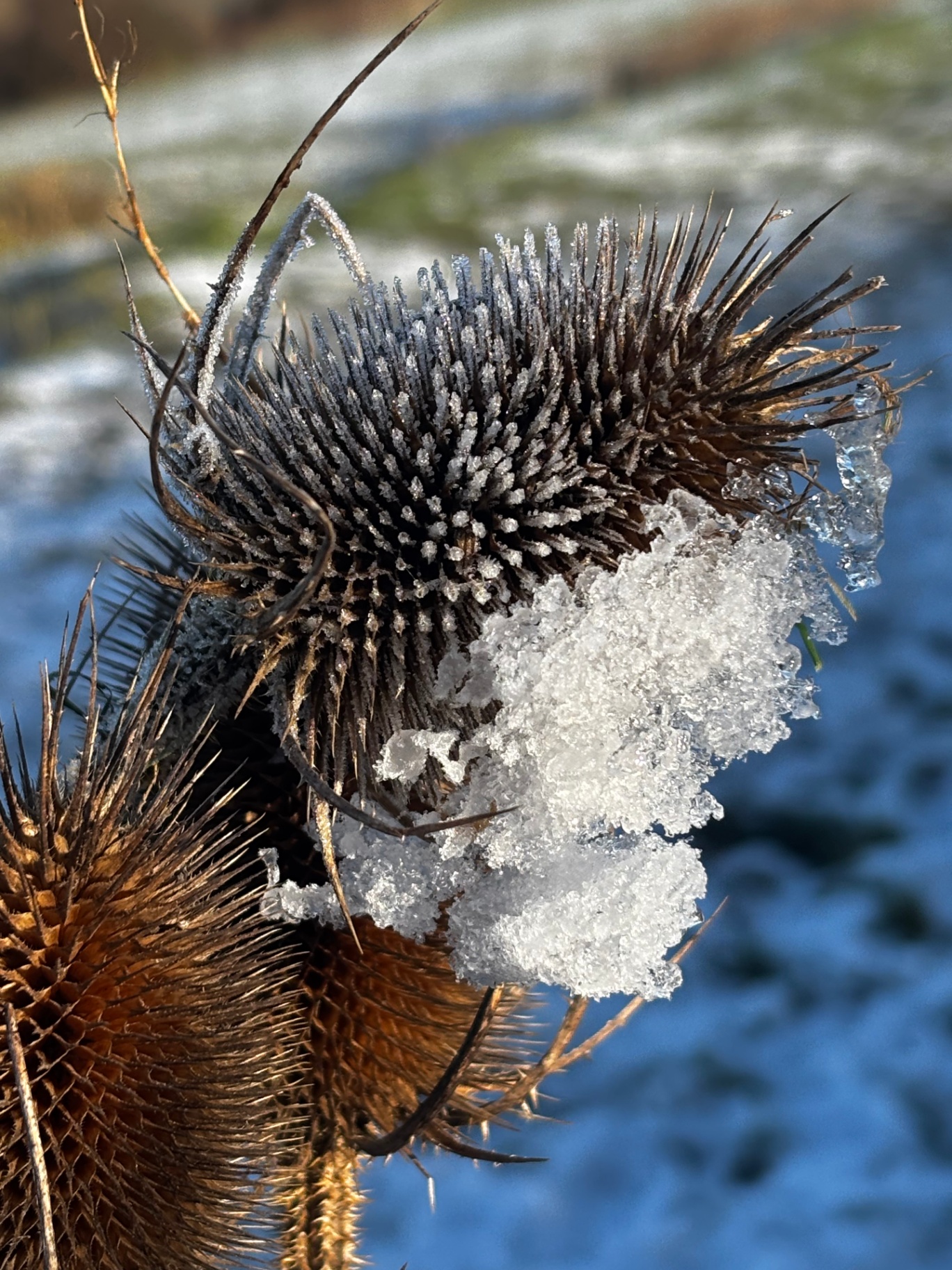
Face your shadows in the wild
Why the Therapy Room Has Its Limits
Traditional shadow work happens in therapy offices, journal pages, and guided meditations. And this work has value. Real value. It creates awareness. It builds understanding. It offers a safe container for exploration.
But here's what many women discover: understanding your shadow and integrating your shadow are two different things.
You can analyze your patterns for years. You can trace them back to childhood. You can name them, categorize them, and write pages about them. And still feel stuck. Still feel like something essential remains locked away.
This is because shadow work isn't just a mental process. It's an embodied one. Your shadow lives in your nervous system, your muscles, your breath. It lives in the part of you that clenches when you feel unsafe and the part that shuts down when you feel too much.
To truly integrate your shadow, you need experiences that reach beyond the mind. You need to feel it move through your body. You need to meet it somewhere primal.
You need the wild.
The Wild as Mirror

Nature doesn't care about your polished persona. The wind doesn't respond to your carefully constructed image. The forest floor doesn't ask you to be more palatable.
When you step into wild spaces, something shifts. The layers of social conditioning start to soften. The masks become harder to maintain. In the presence of ancient trees, rushing water, and open sky, your nervous system begins to remember something it knew long before civilization taught you to hide.
This is why wild immersion has become such a powerful container for shadow work. Nature mirrors back to us what we've forgotten. The harsh winter reveals the beauty of dormancy and death. The frosted teasel, covered in ice, shows us that even in our most frozen states, there is elegance. There is purpose in the pause.
When you bring your shadow into the wild, you're not just confronting it. You're placing it in a context much larger than your individual story. You're remembering that darkness and light are part of the same cycle. That winter always leads to spring.
Standing at the Threshold
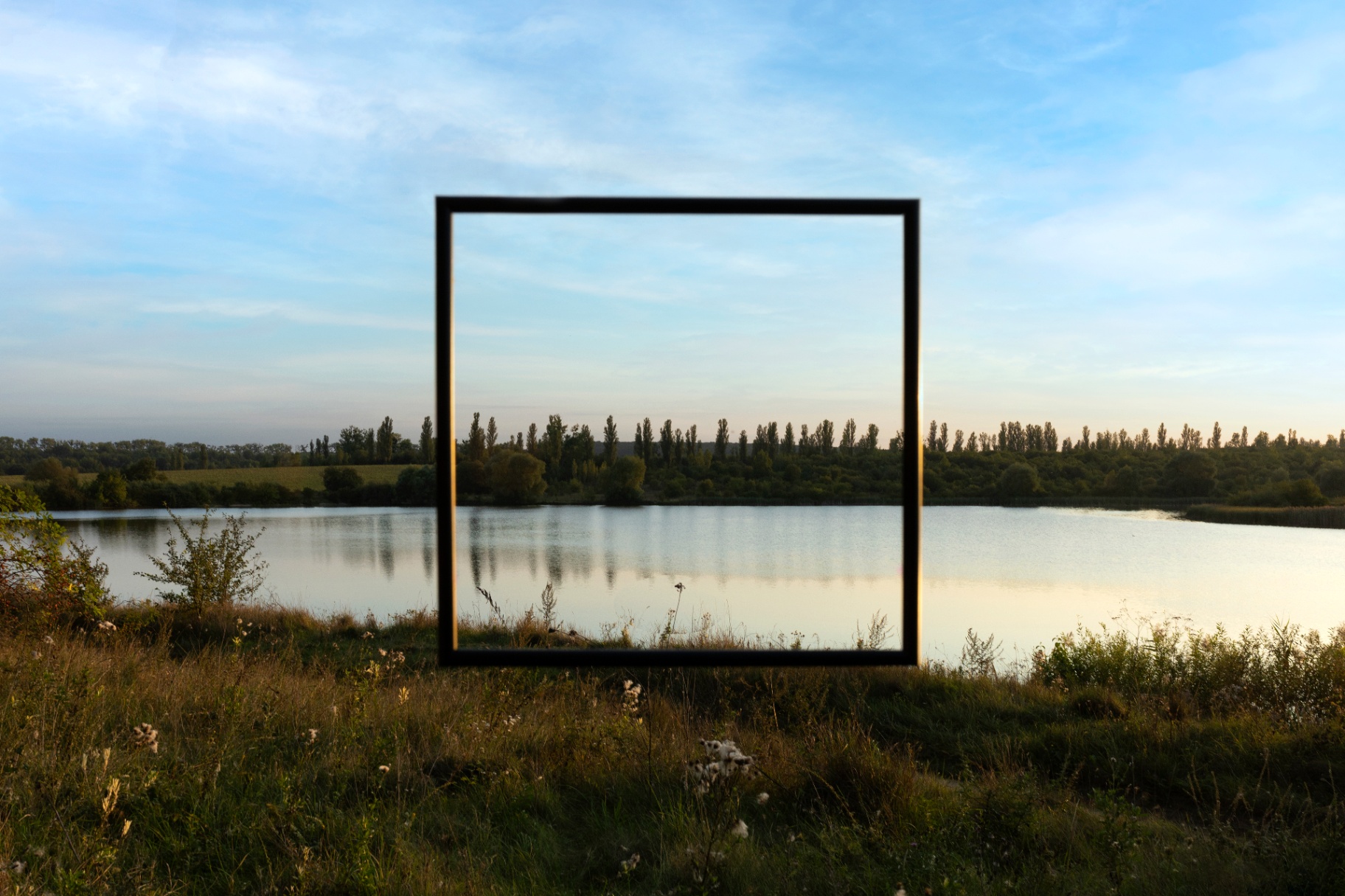
The threshold is a powerful place in shamanic tradition. It's the space between worlds. The doorway between who you've been and who you're becoming.
When you stand at a threshold in your life, whether it's a divorce, a health crisis, a career ending, or children leaving home, your shadow often rises to meet you. This isn't a problem. It's an invitation.
These liminal moments crack us open. They reveal what's been hiding beneath the surface. And if we're willing to meet what emerges with curiosity instead of fear, with compassion instead of judgment, profound transformation becomes possible.
Wild immersion amplifies this threshold energy. When you step away from your daily routine, your familiar environment, your usual distractions, you create space for the unconscious to speak. You invite the shadow to show itself.
And in the witnessing, in the meeting, healing unfolds.
How Wild Shadow Work Actually Works
So what does this look like in practice? Wild immersion for shadow work can take many forms.
Breathwork in nature allows suppressed emotions to surface while the natural world holds you. The earth beneath your body becomes a grounding anchor as old grief, rage, or fear moves through.
Movement and release in outdoor spaces lets your body express what words cannot capture. Dancing barefoot on the earth. Walking in silence through the forest. Letting your muscles shake and your voice sound.
Ceremonial work creates intentional containers for meeting your shadow. Fire ceremonies where you symbolically release what no longer serves. Night vigils where you sit with darkness and discover it has gifts to offer.
Reflection in isolation gives space for your unconscious to speak. Sitting by a stream, watching the water carry leaves downstream, you might suddenly understand a pattern that's haunted you for decades.
The key is embodiment. Wild shadow work moves the process out of your head and into your whole being.
The Importance of Skilled Holding

This work is potent. And potency requires skilled facilitation.
Meeting your shadow in the wild isn't about retraumatizing yourself. It's about creating conditions where integration can happen safely. This means working with guides who understand trauma. Who know how to hold space. Who can help you navigate what emerges with wisdom and care.
A good facilitator creates what we call a "container." This is an energetic and practical structure that allows you to go deep while remaining held. It includes clear boundaries, intentional rituals, and the presence of someone who has walked this path before.
The wild itself becomes part of this container. The land holds you. The elements witness you. And in that witnessing, something profound happens. You realize you're not alone with your shadow. You never were.
Integration: Where the Real Work Lives
Meeting your shadow is just the beginning. Integration is where transformation anchors into your everyday life.
After wild immersion experiences, you need time and support to weave what emerged back into your daily reality. This might look like journaling, continued breathwork practices, or conversations with your guide. It might mean making concrete changes in your relationships or routines.
True shadow integration shifts how you move through the world. You become less reactive and more responsive. Your relationships deepen because you're no longer projecting your disowned parts onto others. Your energy becomes more available because you're not spending it on suppression.
You become more whole. More alive. More you.
The Invitation
If you're standing at a threshold right now, know this: the shadow rising to meet you isn't your enemy. It's the part of you that's been waiting, sometimes for decades, to come home.
And perhaps that homecoming wants to happen somewhere wild. Somewhere your nervous system can remember its ancient rhythms. Somewhere the earth can hold what you've been carrying alone.
Shadow work in the wild isn't about fixing yourself. It's about remembering your wholeness. It's about discovering that the parts you've rejected hold gifts you desperately need for the path ahead.
The wild is waiting. Your shadow is waiting. And when you're ready, transformation unfolds.
Explore our immersive retreats and discover how wild spaces can support your journey home to yourself.


Alchemy of Worlds
Eva Weaver & Claire Lecarpentier
European Rite-of-Passage Facilitators | UK & Europe
Modern rites of passage: shamanic ceremony, firewalk, space clearing and transformational community for our times.


Quick Links
Copyright Alchemy of Worlds LTD - Claire Lecarpentier & Eva Weaver 2026. Alchemy of Worlds. All Rights Reserved.